
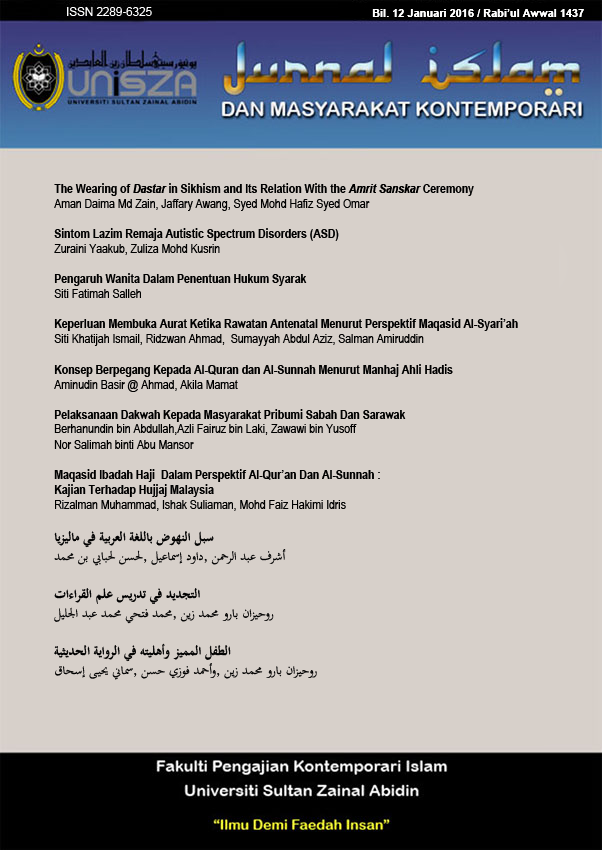
[Distinguished Child and His Aptitude in The Modern Novel] Al-Tifli al-Mumayiz wa ahlitiha fi ar-Riwayati al-Hadisiah.
DOI:
https://doi.org/10.37231/jimk.2016.12.0.153Abstract
Many studies were conducted to examine the eligibility of adults in reporting the Hadith of Prophet Muhammad (peace be upon him). However, scholars have different opinions regarding the permissibility of reporting Hadith by a discerning child. Some of the scholars opined that it is permissible, while others disagreed. It is apparent that discerning children, since the life time of the Prophet (peace be upon him), have been partaking and associating with adults in observing certain good deeds such as praying (salat), leading prayers, fasting, pilgrimage, giving zakat, marriage and testimony (shahada). Many studies were conducted to confirm the eligibility of performing the aforementioned deeds by a discerning child, but to the best of the authors’ knowledge, there is no any study conducted to examine the views of scholars on the issue of reporting Prophetic Hadith by a discerning child. For these reasons the present study aims to examine the opinions of scholars on this subject by employing analytical method which is based on collecting and analyzing relevant qualitative data on the topic. The results show that reporting Hadith consists of two works; searching and reporting the Hadith to others. Further analysis of scholars’ opinions on these two types of works revealed that the scholars have three different views with regard to these two works by a discerning child. The first view is that both searching and reporting of Hadith to others by a discerning child are permissible. However, the second view is that both the two works are not permissible for a discerning child. The last which is the view of the majority is that searching Hadith is permissible for a child if he is discerning and can memorize and preserve it, but the second work (i.e. reporting the Hadith) to others is not permissible for a child until puberty. This is because puberty is among the criteria of reporting Hadith to others. Based on these views, the authors hold the view of the majority. It is recommended that Hadith scholars should focus on extraction of the Prophetic Hadith reported by discerning children.
كتبتْ كتابات كثيرة بينت أهلية الرجال لرواية الØديث، ولكن بالنسبة للأطÙال Ùإن مسألة روايتهم مختل٠Ùيها من Øيث القبول وعدمه؛ Ùمن العلماء من يجيزها ومنهم من يمنعها، ومعرو٠أنّ الأطÙال المميزين منذ عصر النبوة إلى يومنا هذا كانوا يشاركون الرجال والنساء ÙÙŠ أعمال الخير، كالصلاة والصيام والØج وغيرها. ولابد من البØØ« ÙÙŠ أهلية الطÙÙ„ المميز ÙÙŠ عملية الرواية الØديثية، ليتبين هل للطÙÙ„ المميز أهلية ÙÙŠ رواية الØديث أم لا. كما أنّ الكتابات ÙÙŠ الموضوع قليلة جدا، Ùنجد أنّ الدراسات بØثت ÙÙŠ Ø£Øكام الطÙÙ„ المميز ÙÙŠ مسائل كثيرة كشهادته ونكاØÙ‡ وإمامته ÙÙŠ الصلاة والزكاة ÙÙŠ ماله وغير ذلك؛ لكن قلما نجد موضوعا خاصا Ù…Ùصلا بØكم روايته للØديث النبوي. وباستخدام المنهج التØليلي والذي يقوم على جمع المعلومات المتعلقة بالموضوع، ثم التÙسير ثم النقد ثم التØليل، ÙŠØاول هذا البØØ« ØªÙˆØ¶ÙŠØ Ù…ÙˆØ¶Ø¹ الطÙÙ„ المميز ÙÙŠ الرواية ودوره Ùيها، وبيان أقوال العلماء وآرائهم ÙÙŠ ذلك Øتى تظهر لنا جلية قدر أهليته للرواية. وقد توصل البØØ« إلى بعض النتائج أهمها أن رواية الØديث تتأل٠من عمليتين عملية تØمل الØديث ثم عملية أدائه. وأن الطÙÙ„ المميز له أهلية تØمل الØديث إذا توÙرت Ùيه شرطا التØمل وهما التمييز والضبط، وأما أداء الØديث Ùليس له أهلية ذلك لعدم توÙر شروط الأداء Ùيه، وعلى ذلك Ùلا يمكن له القيام بأداء الØديث إلا بعد البلوغ، وعملية رواية الØديث تتم Øين أدى ÙÙŠ مرØلة البلوغ ما تØمل أثناء Ø·Ùولته. وتوصي المقالة الباØثين بتوجيه عنايتهم لاستخراج المرويات التي تØملها الأطÙال ÙÙŠ مرØلة التمييز ثم أدوها ÙÙŠ مرØلة البلوغ من كتب الØديث.
References
القرآن الكريم، المصØ٠العثماني
ابن الصلاØØŒ عثمان بن عبد الرØمن. (1406هـ/1986Ù…). معرÙØ© أنواع علوم الØديث (مقدمة ابن الصلاØ). سوريا: دار الÙكر وبيروت: دار الÙكر المعاصر.
الأبناسي، إبراهيم بن موسى. (1418هـ/1998Ù…). الشذا الÙÙŠØ§Ø Ù…Ù† علوم ابن الصلاØ. (بدون مكان). مكتبة الرشد.
أبو الÙداء، إسماعيل بن عمر بن كثير. (1413هـ/1993Ù…). طبقات الشاÙعيين. (بدون مكان). مكتبة الثقاÙØ© الدينية. (بدون طبعة).
أبو شهبة، Ù…Øمد بن Ù…Øمد. (1406هـ/1985Ù…). دÙاع عن السنة وردّ شبه المستشرقين والكتاب المعاصرين. القاهرة: مجمع البØوث الإسلامية. Ø· 2.
إمام الØرمين، عبد الملك بن عبد الله. (1418هـ/1997). البرهان ÙÙŠ أصول الÙقه. بيروت لبنان: دار الكتب العلمية.
إمام الØرمين، عبد الملك بن عبد الله. (بدون تاريخ). التلخيص ÙÙŠ أصول الÙقه. بيروت: دار البشائر الإسلامية. (بدون طبعة).
البخاري، Ù…Øمد بن إسماعيل. (1422هـ). صØÙŠØ Ø§Ù„Ø¨Ø®Ø§Ø±ÙŠ. (بدون مكان)ØŒ دار طوق النجاة.
بندق، وائل أنور. (بدون تاريخ). المرأة والطÙÙ„ ÙˆØقوق الإنسان. الإسكندرية: دار الÙكر الجامعي.
تسير، نادي Ù…Øمد، (1428هـ/2008Ù…)ØŒ "الأهلية أطوارها أقسامها عوارضها وعلاقتها بقانون الأØوال الشخصية الأردني لسنة 1976Ù…"ØŒ رسالة ماجستير، جامعة الخليل.
الØطاب الرعيني، Ù…Øمد بن Ù…Øمد الطرابلسي. (1412هـ/1992). مواهب الجليل ÙÙŠ Ø´Ø±Ø Ù…Ø®ØªØµØ± خليل. (بدون مكان). دار الÙكر. Ø· 3.
الخضير، عبد الكريم بن عبد الله. (بدون تايخ). Ø´Ø±Ø Ø£Ù„Ùية العراقي. (بدون مكان وناشر وطبعة).
الخطيب البغدادي، Ø£Øمد بن علي. (1995Ù…). الكÙاية ÙÙŠ علم الرواية. المدينة المنورة: المكتبة العلمية. (بدون طبعة).
الخطيب، Ù…Øمد عجاج. (1401هـ/1981Ù…). أصول الØديث علومه ومصطلØÙ‡. بيروت لبنان: دار الÙكر. Ø· 4.
الرامهرمزي، الØسن بن عبد الرØمن. (1404هـ). المØدث الÙاصل بين الراوي والواعي. بيروت: دار الÙكر. Ø· 3.
الزركشي، Ù…Øمد بن عبد الله. (1414هـ/1994Ù…). البØر المØيط ÙÙŠ أصول الÙقه. (بدون مكان). دار الكتبي.
السبكي، علي بن عبد الكاÙÙŠ. (1416هـ/1995Ù…). الإبهاج ÙÙŠ Ø´Ø±Ø Ø§Ù„Ù…Ù†Ù‡Ø§Ø¬. بيروت: دار الكتب العلمية. (بدون طبعة).
السجستاني، أبو داود سليمان بن الأشعث. (بدون تاريخ). سنن أبي داود. صيدا -بيروت: المكتبة العصرية.
السخاوي، Ù…Øمد بن عبد الرØمن. (1424هـ/2003Ù…). ÙØªØ Ø§Ù„Ù…ØºÙŠØ« Ø¨Ø´Ø±Ø Ø£Ù„Ùية الØديث. مصر: مكتبة السنة.
السيوطي، عبد الرØمن بن أبي بكر. (بدون تاريخ). ألÙية السيوطي ÙÙŠ علم الØديث. (بدون مكان). المكتبة العلمية. (بدون طبعة).
السيوطي، عبد الرØمن بن أبي بكر. (بدون تاريخ). تدريب الراوي ÙÙŠ Ø´Ø±Ø ØªÙ‚Ø±ÙŠØ¨ النووي. (بدون مكان). دار طيبة. (بدون طبعة).
الصالØØŒ د. صبØÙŠ إبراهيم. (1984Ù…) علوم الØديث ومصطلØÙ‡. بيروت لبنان: دار العلم للملايين، Ø· 15.
الصنعاني، Ù…Øمد بن إسماعيل. (1417هـ/1997Ù…). ØªÙˆØ¶ÙŠØ Ø§Ù„Ø£Ùكار لمعاني ØªÙ†Ù‚ÙŠØ Ø§Ù„Ø£Ù†Ø¸Ø§Ø±. بيروت لبنان: دار الكتب العلمية.
عتر، نور الدين Ù…Øمد. (1418هـ/1997Ù…) منهج النقد ÙÙŠ علوم الØديث. دمشق سوريا: دار الÙكر. Ø· 3.
العراقي، عبد الرØيم بن الØسين. (1428Ù‡). التبصرة والتذكرة ÙÙŠ علوم الØديث (ألÙية العراقي). الرياض-السعودية: مكتبة دار المناهج للنشر والتوزيع. Ø· 2.
اللاØÙ…ØŒ د. إبراهيم بن عبد الله. (بدون تايخ). Ø´Ø±Ø Ø§Ø®ØªØµØ§Ø± علوم الØديث. (بدون مكان وناشر وطبعة).
النووي، ÙŠØيى بن شرÙ. (1405هـ/1985Ù…). التقريب والتيسير لمعرÙØ© سنن البشير النذير ÙÙŠ أصول الØديث. بيروت: دار الكتاب العربي.
النووي، ÙŠØيى بن شرÙ. (1988Ù…). المجموع Ø´Ø±Ø Ø§Ù„Ù…Ù‡Ø°Ø¨. (بدون مكان). دار الÙكر. (بدون طبعة).
وزارة الأوقا٠والشئون الإسلامية. (1404-1427هـ). الموسوعة الÙقهية الكويتية. الكويت: دار السلاسل.
اليØصبي، القاضي عياض بن موسى. (1379هـ/1970Ù…). الإلماع إلى معرÙØ© أصول الرواية وتقييد السماع. القاهرة/تونس: دار التراث/المكتبة العتيقة.
Downloads
Published
Issue
Section
License
Submission of an article implies that the work described has not been published previously (except in the form of an abstract or as part of a published lecture or academic thesis), that it is not under consideration for publication elsewhere, that its publication is approved by all authors and tacitly or explicitly by the responsible authorities where the work was carried out, and that, if accepted, will not be published elsewhere in the same form, in English or in any other language, without the written consent of the Publisher. The Editors reserve the right to edit or otherwise alter all contributions, but authors will receive proofs for approval before publication.
Copyrights for articles published in JIMK journals are retained by the authors, with first publication rights granted to the journal. The journal/publisher is not responsible for subsequent uses of the work. It is the author's responsibility to bring an infringement action if so desired by the author.


